Bill Kerr Speaks about American paper jobs
June 28, 2022
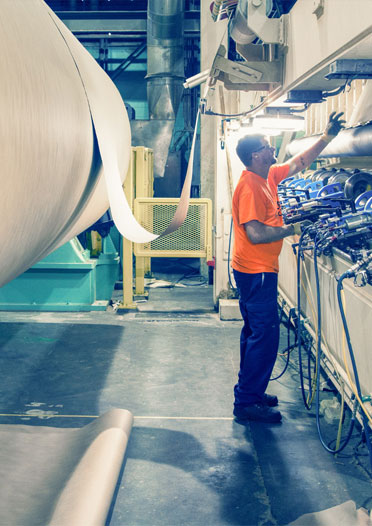
The PPRC is a grassroots organization led by hourly employees advocating for the U.S. forest products industry. We support policies that encourage economic growth, abundant and sustainable fiber supply, and sensible science-based environmental policies.
The U.S. forest products industry is vitally important to our nation’s economy, employing approximately 950,000 people. We rank among the top 10 manufacturers in 45 states and represent four percent of the total U.S. manufacturing gross domestic product (GDP).
We are people dedicated to conserving the environment while taking into account the economic stability of the workforce and our surrounding communities.
After years of witnessing flawed policies that hurt the forest products industry in the Pacific Northwest, it was evident that the voice of the worker was not being heard. The PPRC gives workers a voice.
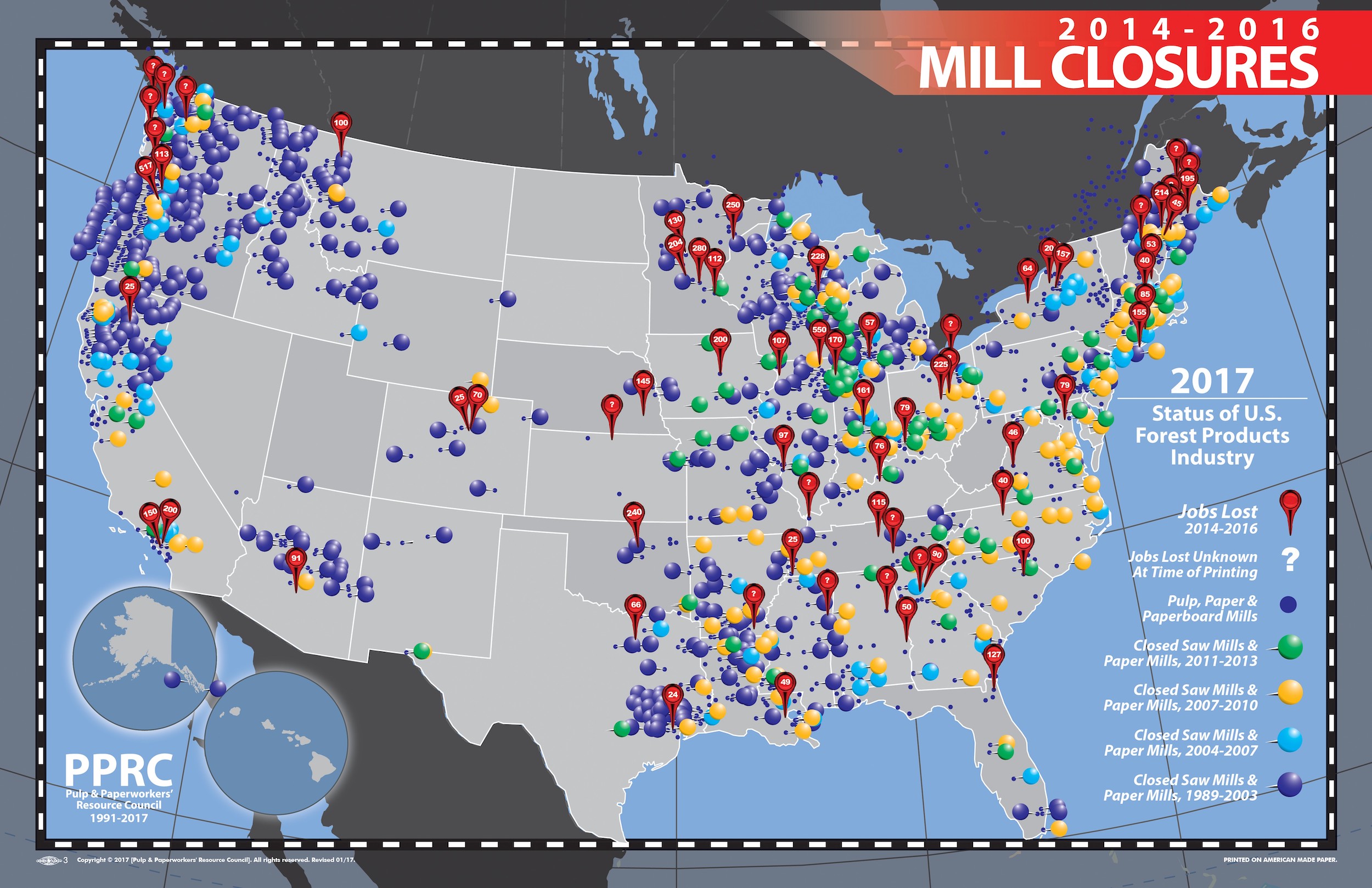
Onerous regulations have resulted in facility closures, job losses, slowed job growth and diminished competitive advantages in the U.S. and abroad.
The PPRC is the unifying voice of the forest products industry to ensure that our real-world perspectives are considered in all policy and regulatory decisions that impact our jobs and communities.
The PPRC gives ground floor workers a voice.
The PPRC has become the nation’s premier grassroots organization for the forest products industry by remaining non-partisan and advocating for reasonable solutions to real-world issues impacting the jobs and communities where we work and live.









Bill Kerr Speaks about American paper jobs
June 28, 2022
For Good Jobs And a Cleaner Environment, Look to Paper…
December 30, 2021
By Leeann Foster & Heidi Brock June 25, 2020 at 5:00 am ET In recent months, the COVID-19 pandemic shed light on the essential workers that care for us, manufacture everyday products, restock our shelves and deliver necessities in corrugated boxes to our doorstep. For…
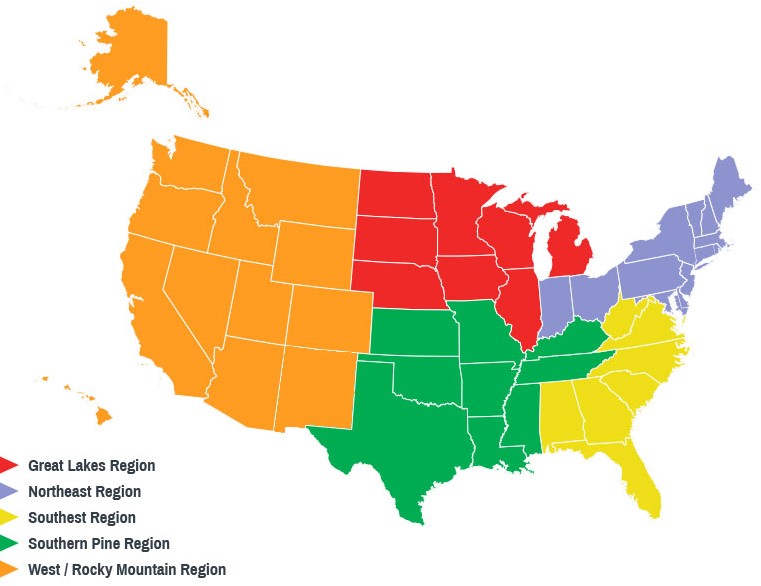
N. Dakota, S. Dakota, Illinois, Minnesota, Wisconsin, Michigan, Nebraska, Iowa
Tim Wegner
Packaging Corp of America
USW Local 2-159
International Falls, MN 56649
timothywegner@packagingcorp.com
Bill Schwalbach
Ahlstrom
USW Local 2-20
Kaukauna, WI 54130
william.schwalbach@ahlstrom.com
Dan Gignac
Ahlstrom
USW Local 2-15
Rhinelander, WI 54501
Daniel.gignac@ahlstrom.com
Jim Arnold
Pixelle Specialty Solutions
USW Local 1303
Hanover, PA 17331
Jim.Arnold@Pixelle.com
Jason Joiner
Sylvamo
USW Local 497
Ticonderoga, NY 12883
Jason.Joiner@sylvamo.com
Phil Myers
International Paper
USW Local 7-103a
Newport, IN 47928
PhilmyersPPRC@outlook.com
Rodney Rowser
WestRock
USW Local #9-719
Demopolis, AL 36732
rodney.rowser@westrock.com
Doug Kinsey
International Paper
IAM Local 414
Rome, GA 30165
james.kinsey@ipaper.com
Jeff Kirby
WestRock
USW Local 764
Florence, SC 29505
jeffnascar@icloud.com
Texas, Oklahoma, Kansas, Missouri, Tennessee, Kentucky, Mississippi, Louisiana, & Arkansas
Trollis Hickman
Packaging Corp of America
USW Local 13-725
DeRidder, LA 70634
Trollishickman@outlook.com
Jeff Wiley
Graphics Packaging
IBEW Local 301
Queen City, TX 75572
jjaawiley@gmail.com
Mike Arndt
Green Bay Packaging
USW Local 13-1965
Morrilton, AR, 72110
mikearndt13@yahoo.com
Washington, Oregon, California, Colorado, Idaho, Wyoming, Arizona, Montana, New Mexico, Nevada, Utah, Hawaii, & Alaska
Chris Rice
Westrock
CPU Local 675
Covington, VA 24426
Christopher.rice@westrock.com
Chris Polcyn
Westrock
USW Local 8-467
West Point, VA 23181
Christopher.Polcyn@westrock.com
Keith Davis
WestRock Corp
USW Local 9542
Stevenson, AL 35772
Jimmy.k.davis@westrock.com
By Leeann Foster & Heidi Brock June 25, 2020 at 5:00 am ET In recent months, the COVID-19 pandemic shed light on the essential workers that care for us, manufacture everyday products, restock our shelves and deliver necessities in … [Read more]
By David M. WiseWestRockPulp and Paperworkers’ Resource CouncilNational Steering Committee Chairman I got my start in the forest products industry 26 years ago after serving in the US Army. When I came home (Desert Shield /Storm), there weren’t a … [Read more]
ATLANTA – On Wednesday, September 12, 2018 the PPRC, a grassroots organization of hourly employees of the paper and wood products industry, along with Management leaders from several different companies, co‐hosted a joint Labor/Management Conference. … [Read more]
By Donna HarmanPresident & CEOAmerican Forest & Paper Association We take advantage of every opportunity to advance realistic public policy that supports the pulp, paper, packaging, tissue and wood products industry and its hardworking … [Read more]
Lieutenant General Todd T. SemoniteCommanding General and Chief of EngineersU.S, Army Corps of Engineers441 G St NWWashington, DC 20314 Dear Lieutenant General Semonite: The undersigned organizations understand and appreciate your commitment to … [Read more]
By Robert E. Gay Sr. Virginia is a leader in developing an innovative and diverse energy marketplace to ensure the state’s economy will remain competitive well into the future. However, a new regulation being developed by the Department of … [Read more]
David K. Paylor, Director, Virginia Environmental QualityMichael G. Dowd, Director, Air and Renewable Energy DivisionVirginia Department of Environmental Quality629 E. Main StreetRichmond, VA 23219 Dear Director, Paylor and Director Dowd: On … [Read more]
WASHINGTON, Feb. 13, 2015 /PRNewswire/ -- American workers employed in the U.S. forest products industry visited Washington, D.C. this week to meet with members of Congress and administration officials. Their goal was to educate elected and appointed … [Read more]